Naturopathy in Traditional Thai Medicine
Naturopathy and natural healing approaches form part of the broader knowledge found within Traditional Thai Medicine and other traditional systems of healing. These approaches seek to work with nature and the body’s own protective and restorative mechanisms to support recovery, maintain health and restore balance.
What Is Naturopathy?
“ Naturopathy refers to approaches used in the care and management of illness that seek to work in harmony with nature and the body’s own protective and restorative mechanisms.
These approaches may draw upon science, art, philosophy and practical methods of care, considering physical, biological, mental and spiritual aspects of human well-being.”
The Body’s Natural Healing Power
A central concept of naturopathy is the belief that the living body possesses its own capacity to protect, repair and restore itself.
For example, when a person has a wound or undergoes surgery, medical treatment may clean and protect the wound, apply medication and create appropriate conditions for recovery. The actual process of tissue repair, however, is carried out by the living body.
From this perspective, the role of care is to remove factors that interfere with recovery and to create conditions that allow the body’s natural healing processes to function as effectively as possible.
The Vital Force in Natural Healing
At the heart of naturopathic thought is the concept of the vital force the idea that the living body possesses an inherent capacity to protect, repair and restore itself.
According to this principle, recovery may be supported when the body receives the conditions and resources it needs, including appropriate food, medicine, rest and medical care.
Natural Healing Through History
The principles of natural healing are often described as being as old as humanity itself.
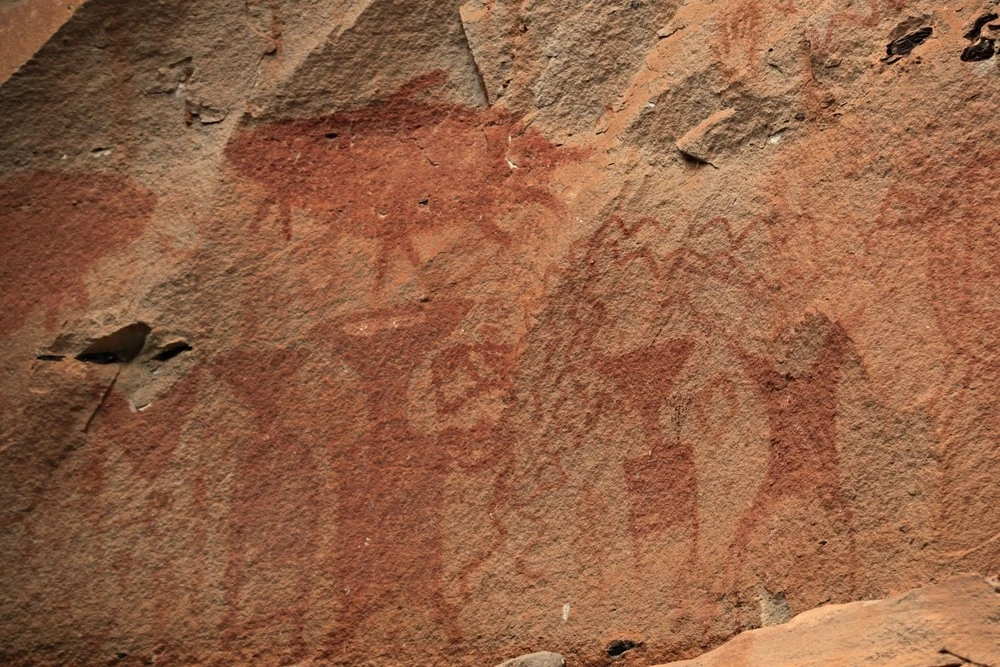

Historical accounts from ancient civilisations describe the use of natural methods of care, including massage. In ancient Egypt, forms of massage and physical treatment were practised as part of approaches to health and well-being.
Hippocrates, widely regarded as the father of Western medicine, is historically associated with theories of bodily balance and the four classical elements — earth, water, air and fire. Concepts involving elemental balance also appear in various traditional medical systems, although their theories and methods developed within different historical and cultural contexts.
12 Natural Healing Approaches
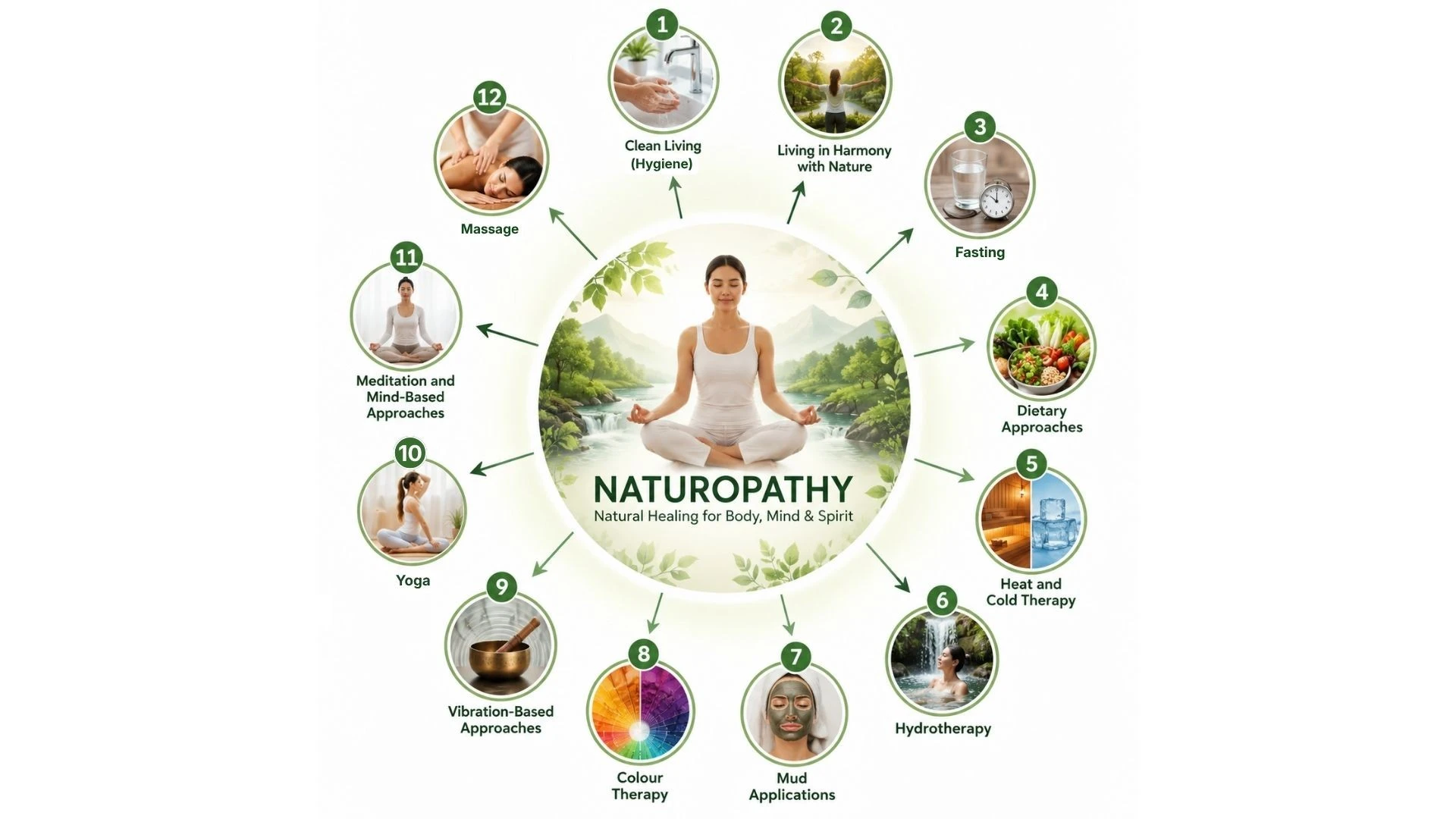
Natural healing has long been part of traditional systems of care. Drawing from historical medical texts and scholarly sources, these practices may be understood through twelve broad approaches. Each approach seeks to support holistic wellbeing, recovery, prevention and long-term health by working with the body’s natural processes of balance, adaptation and restoration.
1 Clean and Hygienic Living
Clean living and personal hygiene are regarded as fundamental conditions for maintaining health and supporting recovery.
2 Living in Harmony with Nature
Natural healing traditions often emphasise the relationship between human health, daily life and the surrounding natural environment.
3 Fasting
Fasting is described in the historical source as one of the approaches associated with naturopathic practice.
4 Dietary Approaches
Food and nutrition are considered important elements in supporting health, recovery and the body’s natural processes.
5 Heat and Cold Therapy
The therapeutic use of heat and cold is included among traditional natural approaches to care.
6 Hydrotherapy
Hydrotherapy refers to the use of water in approaches intended to support health and physical recovery.
7 Mud Applications
The source also describes the traditional use of mud applications as one of the methods associated with naturopathy.
8 Colour Therapy
Colour therapy appears in the historical source as one of the approaches traditionally classified under naturopathy.
9 Vibration-Based Approaches
The use of vibration is also listed among the methods historically associated with natural healing practices.
10 Yoga
Yoga combines physical movement, breathing and mental practices and is included among the approaches described in the source.
11 Meditation and Mind-Based Approaches
Meditation and mental practices are included as approaches related to the relationship between the body, mind and well-being.
12 Massage
Massage is one of the oldest forms of therapeutic care. It may involve the use of the hands, elbows, feet, and other adapted tools or devices for therapeutic purposes, and remains particularly relevant to the study of Traditional Thai Medicine and Nuad Thai.
Naturopathy and Traditional Thai Medicine
Within the broader study of Traditional Thai Medicine, natural healing approaches can help illustrate how traditional systems have understood the relationship between the body, nature, daily life and recovery.
This overview provides an introduction to the principles and methods described in a Thai traditional medicine textbook. Each subject will be explored in greater detail in future sections.
Source and Reference
General Textbook of Traditional Medicine, Medical Practice, Volume 3
Bureau of the Art of Healing, Department of Health Service Support, Ministry of Public Health, Thailand.
Section: “Naturopathy” (ธรรมชาติบำบัด), pp. 71–86.